بِسۡمِ ٱللَّهِ ٱلرَّحۡمَـٰنِ ٱلرَّحِيمِ
09/01/2026
I learned about Graph Research from my brother Mohamad in Turkey and Brother Mo On (Not Sure Which Country I need to find out) regarding Moon/Heaven Splits. My work includes a presentation on Quranic analysis, the history of graphs, and Prophet Mohamad’s Miracle. May Allah bless their efforts.
1/GRAPH
Graph theory was invented in the 18th century, with its formal origin attributed to the Swiss mathematician Leonhard Euler in 1736.
Euler laid the foundation for the field by solving the real-world puzzle known as the Seven Bridges of Königsberg problem. The problem asked if it was possible to walk through the city of Königsberg and cross each of its seven bridges exactly once without retracing any steps.
Euler’s Contribution
Euler’s key insight was to abstract the physical layout of the city into a diagram that only showed the relevant information for the problem: the landmasses (represented as points or vertices) and the bridges (represented as lines or edges).
He developed the first theorem in graph theory, proving that such a walk (an Eulerian path) was impossible because the resulting graph had more than two vertices with an odd number of edges (degree).
His 1736 paper, Solutio problematis ad geometriam situs pertinentis (“The solution of a problem relating to the geometry of position”), is considered the founding document of graph theory and a precursor to the field of topology.
Subsequent Development
While Euler established the first result, the field saw limited development for nearly a century afterward. Key milestones in the 19th and 20th centuries include:
1845: Physicist Gustav Kirchhoff used graph-theoretical ideas to analyze electrical circuits.
1852: The four-color map problem was first posed, spurring significant research into graph planarity and coloring.
1857: William Rowan Hamilton invented the “Icosian Game” puzzle, which involved finding a path along the edges of a dodecahedron that visits each corner exactly once, leading to the concept of Hamiltonian circuits.
1878: The term “graph” in the mathematical sense was first used by the British mathematician James Joseph Sylvester in a paper relating to chemical structures.
1930s onwards: The field expanded significantly in the 20th century with the introduction of random graphs, the development of algorithms (like Depth-First Search and Breadth-First Search), and widespread applications in computer science, social networks, and operations research.
QURAN
Inshaallah we will use Graph Technology to better understand the miracles of the Quran. The below is Chapter Number 55 of the Quran known as Al-Rahman. I didn’t copy the Translation of this Surat as you can find from books or Internet easily.
سُوۡرَةُ الرَّحمٰن
بِسۡمِ ٱللَّهِ ٱلرَّحۡمَـٰنِ ٱلرَّحِيمِ
ٱلرَّحۡمَـٰنُ (١) عَلَّمَ ٱلۡقُرۡءَانَ (٢) خَلَقَ ٱلۡإِنسَـٰنَ (٣) عَلَّمَهُ ٱلۡبَيَانَ (٤) ٱلشَّمۡسُ وَٱلۡقَمَرُ بِحُسۡبَانٍ۬ (٥) وَٱلنَّجۡمُ وَٱلشَّجَرُ يَسۡجُدَانِ (٦) وَٱلسَّمَآءَ رَفَعَهَا وَوَضَعَ ٱلۡمِيزَانَ (٧) أَلَّا تَطۡغَوۡاْ فِى ٱلۡمِيزَانِ (٨) وَأَقِيمُواْ ٱلۡوَزۡنَ بِٱلۡقِسۡطِ وَلَا تُخۡسِرُواْ ٱلۡمِيزَانَ (٩) وَٱلۡأَرۡضَ وَضَعَهَا لِلۡأَنَامِ (١٠) فِيہَا فَـٰكِهَةٌ۬ وَٱلنَّخۡلُ ذَاتُ ٱلۡأَكۡمَامِ (١١) وَٱلۡحَبُّ ذُو ٱلۡعَصۡفِ وَٱلرَّيۡحَانُ (١٢) فَبِأَىِّ ءَالَآءِ رَبِّكُمَا تُكَذِّبَانِ (١٣) خَلَقَ ٱلۡإِنسَـٰنَ مِن صَلۡصَـٰلٍ۬ كَٱلۡفَخَّارِ (١٤) وَخَلَقَ ٱلۡجَآنَّ مِن مَّارِجٍ۬ مِّن نَّارٍ۬ (١٥) فَبِأَىِّ ءَالَآءِ رَبِّكُمَا تُكَذِّبَانِ (١٦) رَبُّ ٱلۡمَشۡرِقَيۡنِ وَرَبُّ ٱلۡمَغۡرِبَيۡنِ (١٧) فَبِأَىِّ ءَالَآءِ رَبِّكُمَا تُكَذِّبَانِ (١٨) مَرَجَ ٱلۡبَحۡرَيۡنِ يَلۡتَقِيَانِ (١٩) بَيۡنَہُمَا بَرۡزَخٌ۬ لَّا يَبۡغِيَانِ (٢٠) فَبِأَىِّ ءَالَآءِ رَبِّكُمَا تُكَذِّبَانِ (٢١) يَخۡرُجُ مِنۡہُمَا ٱللُّؤۡلُؤُ وَٱلۡمَرۡجَانُ (٢٢) فَبِأَىِّ ءَالَآءِ رَبِّكُمَا تُكَذِّبَانِ (٢٣) وَلَهُ ٱلۡجَوَارِ ٱلۡمُنشَـَٔاتُ فِى ٱلۡبَحۡرِ كَٱلۡأَعۡلَـٰمِ (٢٤) فَبِأَىِّ ءَالَآءِ رَبِّكُمَا تُكَذِّبَانِ (٢٥) كُلُّ مَنۡ عَلَيۡہَا فَانٍ۬ (٢٦) وَيَبۡقَىٰ وَجۡهُ رَبِّكَ ذُو ٱلۡجَلَـٰلِ وَٱلۡإِكۡرَامِ (٢٧) فَبِأَىِّ ءَالَآءِ رَبِّكُمَا تُكَذِّبَانِ (٢٨) يَسۡــٴَـلُهُ مَن فِى ٱلسَّمَـٰوَٲتِ وَٱلۡأَرۡضِۚ كُلَّ يَوۡمٍ هُوَ فِى شَأۡنٍ۬ (٢٩) فَبِأَىِّ ءَالَآءِ رَبِّكُمَا تُكَذِّبَانِ (٣٠) سَنَفۡرُغُ لَكُمۡ أَيُّهَ ٱلثَّقَلَانِ (٣١) فَبِأَىِّ ءَالَآءِ رَبِّكُمَا تُكَذِّبَانِ (٣٢) يَـٰمَعۡشَرَ ٱلۡجِنِّ وَٱلۡإِنسِ إِنِ ٱسۡتَطَعۡتُمۡ أَن تَنفُذُواْ مِنۡ أَقۡطَارِ ٱلسَّمَـٰوَٲتِ وَٱلۡأَرۡضِ فَٱنفُذُواْۚ لَا تَنفُذُونَ إِلَّا بِسُلۡطَـٰنٍ۬ (٣٣) فَبِأَىِّ ءَالَآءِ رَبِّكُمَا تُكَذِّبَانِ (٣٤) يُرۡسَلُ عَلَيۡكُمَا شُوَاظٌ۬ مِّن نَّارٍ۬ وَنُحَاسٌ۬ فَلَا تَنتَصِرَانِ (٣٥) فَبِأَىِّ ءَالَآءِ رَبِّكُمَا تُكَذِّبَانِ (٣٦) فَإِذَا ٱنشَقَّتِ ٱلسَّمَآءُ فَكَانَتۡ وَرۡدَةً۬ كَٱلدِّهَانِ (٣٧) فَبِأَىِّ ءَالَآءِ رَبِّكُمَا تُكَذِّبَانِ (٣٨) فَيَوۡمَٮِٕذٍ۬ لَّا يُسۡـٴَـلُ عَن ذَنۢبِهِۦۤ إِنسٌ۬ وَلَا جَآنٌّ۬ (٣٩) فَبِأَىِّ ءَالَآءِ رَبِّڪُمَا تُكَذِّبَانِ (٤٠) يُعۡرَفُ ٱلۡمُجۡرِمُونَ بِسِيمَـٰهُمۡ فَيُؤۡخَذُ بِٱلنَّوَٲصِى وَٱلۡأَقۡدَامِ (٤١) فَبِأَىِّ ءَالَآءِ رَبِّكُمَا تُكَذِّبَانِ (٤٢) هَـٰذِهِۦ جَهَنَّمُ ٱلَّتِى يُكَذِّبُ بِہَا ٱلۡمُجۡرِمُونَ (٤٣) يَطُوفُونَ بَيۡنَہَا وَبَيۡنَ حَمِيمٍ ءَانٍ۬ (٤٤) فَبِأَىِّ ءَالَآءِ رَبِّكُمَا تُكَذِّبَانِ (٤٥) وَلِمَنۡ خَافَ مَقَامَ رَبِّهِۦ جَنَّتَانِ (٤٦) فَبِأَىِّ ءَالَآءِ رَبِّكُمَا تُكَذِّبَانِ (٤٧) ذَوَاتَآ أَفۡنَانٍ۬ (٤٨) فَبِأَىِّ ءَالَآءِ رَبِّكُمَا تُكَذِّبَانِ (٤٩) فِيہِمَا عَيۡنَانِ تَجۡرِيَانِ (٥٠) فَبِأَىِّ ءَالَآءِ رَبِّكُمَا تُكَذِّبَانِ (٥١) فِيہِمَا مِن كُلِّ فَـٰكِهَةٍ۬ زَوۡجَانِ (٥٢) فَبِأَىِّ ءَالَآءِ رَبِّكُمَا تُكَذِّبَانِ (٥٣) مُتَّكِـِٔينَ عَلَىٰ فُرُشِۭ بَطَآٮِٕنُہَا مِنۡ إِسۡتَبۡرَقٍ۬ۚ وَجَنَى ٱلۡجَنَّتَيۡنِ دَانٍ۬ (٥٤) فَبِأَىِّ ءَالَآءِ رَبِّكُمَا تُكَذِّبَانِ (٥٥) فِيہِنَّ قَـٰصِرَٲتُ ٱلطَّرۡفِ لَمۡ يَطۡمِثۡہُنَّ إِنسٌ۬ قَبۡلَهُمۡ وَلَا جَآنٌّ۬ (٥٦) فَبِأَىِّ ءَالَآءِ رَبِّكُمَا تُكَذِّبَانِ (٥٧) كَأَنَّہُنَّ ٱلۡيَاقُوتُ وَٱلۡمَرۡجَانُ (٥٨) فَبِأَىِّ ءَالَآءِ رَبِّكُمَا تُكَذِّبَانِ (٥٩) هَلۡ جَزَآءُ ٱلۡإِحۡسَـٰنِ إِلَّا ٱلۡإِحۡسَـٰنُ (٦٠) فَبِأَىِّ ءَالَآءِ رَبِّكُمَا تُكَذِّبَانِ (٦١) وَمِن دُونِہِمَا جَنَّتَانِ (٦٢) فَبِأَىِّ ءَالَآءِ رَبِّكُمَا تُكَذِّبَانِ (٦٣) مُدۡهَآمَّتَانِ (٦٤) فَبِأَىِّ ءَالَآءِ رَبِّكُمَا تُكَذِّبَانِ (٦٥) فِيہِمَا عَيۡنَانِ نَضَّاخَتَانِ (٦٦) فَبِأَىِّ ءَالَآءِ رَبِّكُمَا تُكَذِّبَانِ (٦٧) فِيہِمَا فَـٰكِهَةٌ۬ وَنَخۡلٌ۬ وَرُمَّانٌ۬ (٦٨) فَبِأَىِّ ءَالَآءِ رَبِّكُمَا تُكَذِّبَانِ (٦٩) فِيہِنَّ خَيۡرَٲتٌ حِسَانٌ۬ (٧٠) فَبِأَىِّ ءَالَآءِ رَبِّكُمَا تُكَذِّبَانِ (٧١) حُورٌ۬ مَّقۡصُورَٲتٌ۬ فِى ٱلۡخِيَامِ (٧٢) فَبِأَىِّ ءَالَآءِ رَبِّكُمَا تُكَذِّبَانِ (٧٣) لَمۡ يَطۡمِثۡہُنَّ إِنسٌ۬ قَبۡلَهُمۡ وَلَا جَآنٌّ۬ (٧٤) فَبِأَىِّ ءَالَآءِ رَبِّكُمَا تُكَذِّبَانِ (٧٥) مُتَّكِـِٔينَ عَلَىٰ رَفۡرَفٍ خُضۡرٍ۬ وَعَبۡقَرِىٍّ حِسَانٍ۬ (٧٦) فَبِأَىِّ ءَالَآءِ رَبِّكُمَا تُكَذِّبَانِ (٧٧) تَبَـٰرَكَ ٱسۡمُ رَبِّكَ ذِى ٱلۡجَلَـٰلِ وَٱلۡإِكۡرَامِ (٧٨)
The Below is the analyses of this Surah.
The Chapter has 1657 Letters, 351 Words, 1 Chapter and 78 Verses
Line number 1, Chapter Number 55, Name of the Chapter is Al-Rahman, Verse Number 1, The Verse has 1 Word and 6 letters.
Line Number 2, Chapter Number 55, Name of the Chapter is Al- Rahman, Verse Number 2, The Verse has 2 Words, and 10 Letters.
And so on line number 3 and then 4 to the end line number 78

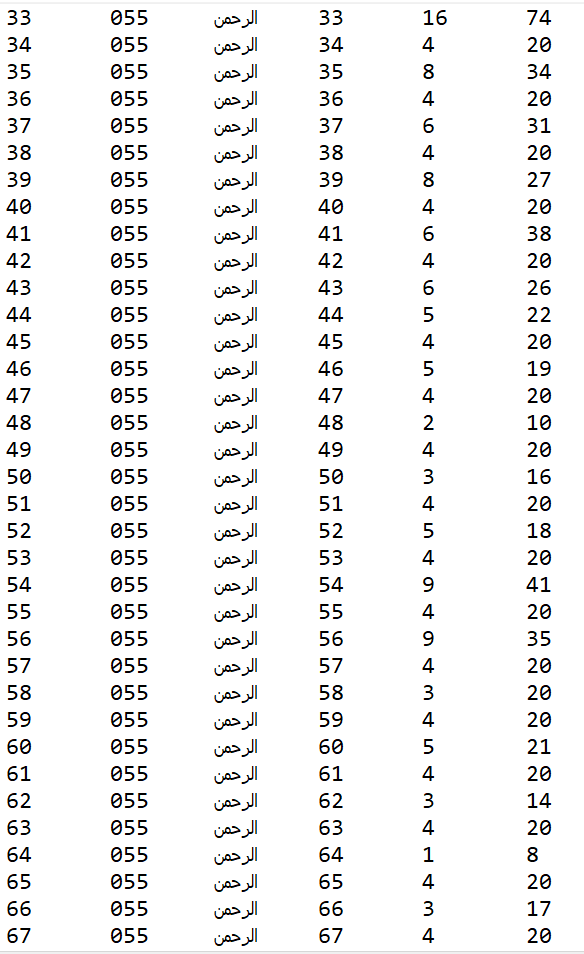
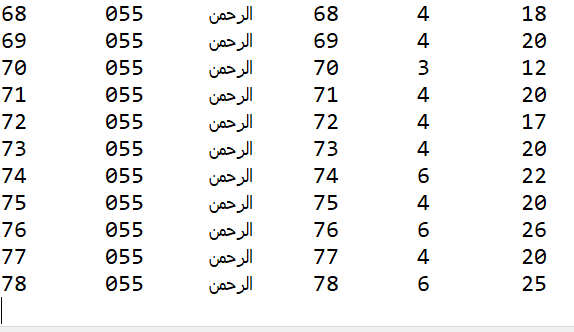
Now Find here below the graph with details and then Insha’Allah I will explain more about the results

The x-axis is the horizontal line (across) and the y-axis is the vertical line (up-down)
The X-Axis has Quran Verses starting from Verse Number 1 from left to Verse number 78 on the right.
The Y-Axis has Only Count Numbers from 0 to 80.
The First Line represent Words Count for each Verse (from Verses 1 to 78)
The Second Line represent Letters for each Verse (From Verses 1 to 78)
For example The first line (Down)represent the words and the second line (Top) represent the Letters.
So the researcher plotted all the Verses words and letters and joined together
With the help of Graph we can now see beautifully the relationship between Verses.
If you investigate the Graph you can see Verse number 33 is the highest due to more words and letters.
I mean its the only Verse which is highest on this diagram.
The verse’s meaning is connected to its greatness as it is a challenge from Allah to all humans and jinns.
Let’s learn the meaning of the Verse and connect with the Graph and understand.
يَـٰمَعۡشَرَ ٱلۡجِنِّ وَٱلۡإِنسِ إِنِ ٱسۡتَطَعۡتُمۡ أَن تَنفُذُواْ مِنۡ أَقۡطَارِ ٱلسَّمَـٰوَٲتِ وَٱلۡأَرۡضِ فَٱنفُذُواْۚ لَا تَنفُذُونَ إِلَّا بِسُلۡطَـٰنٍ۬ (٣٣)
(Surah Ar-Rahman, 55:33),
Translation
“O company of jinn and mankind, if you are able to pass beyond the regions of the heavens and the earth, then pass. You will not pass except with authority [from Allah].”
Comment
This verse is indeed a profound challenge, highlighting the limitations of both jinn and humans in traversing the vastness of creation without divine permission or power. The core of your question revolves around the meaning of “السَّمَٰوَٰتِ وَالْأَرْضِ” (al-samāwāti wal-arḍ) in this context and its implications for space travel and exploration.
“السَّمَٰوَٰتِ وَالْأَرْضِ” (al-samāwāti wal-arḍ) in this verse refers to the entirety of creation, encompassing both the heavens (السَّمَٰوَٰتِ) and the earth (الْأَرْضِ) in their broadest, cosmic sense.
It is not limited to the physical planet Earth or the immediate atmosphere. Islamic scholars generally interpret “السَّمَٰوَٰتِ” as the celestial spheres, including all galaxies, stars, and cosmic phenomena beyond our immediate reach, and “الْأَرْضِ” as the terrestrial realm, including its depths and dimensions.
This comprehensive understanding implies that the challenge extends to all known and unknown territories within the universe.
The phrase “أَقْطَارِ” (aqṭār), meaning “regions” or “confines,” further emphasizes the vastness and boundaries of these realms.
Therefore, the verse is not merely about traveling within Earth’s atmosphere or to the moon, but about transcending the fundamental limits of existence as set by the Creator.
The verse suggests that neither humans nor jinn can penetrate these vast regions without “سُلْطَٰنٍ” (sulṭān), which is widely interpreted as divine authority, power, or enabling knowledge/means granted by Allah.
This “sulṭān” is not necessarily a magical power but can be understood as the scientific and technological advancements, or even spiritual insights, that Allah permits and facilitates.
The mention of “heavens and earth” together signifies the totality of the created order, from the deepest parts of the earth to the farthest reaches of the cosmos. This means the challenge encompasses both traveling through space and potentially exploring the depths of the earth, though the emphasis is often placed on the celestial due to its inherent mystery and vastness.
Regarding today’s spaceships and satellites, the verse does not contradict human achievements in space exploration.
The “sulṭān” can be seen as the knowledge and technology that Allah has enabled humanity to discover and utilize. When humans send spaceships and satellites into space, they are doing so with the “sulṭān” of scientific understanding, engineering capabilities, and the laws of physics that Allah has established.
These advancements allow humans to “pass beyond” certain regions, but within the confines and parameters set by divine will.
The verse implies that ultimate, unhindered traversal of the entirety of the heavens and earth, especially in a way that transcends the natural laws or without divine permission, is impossible.
It’s a reminder of the ultimate sovereignty of Allah over all creation and the inherent limitations of created beings, even with their greatest technological prowess. Therefore, the verse is not a denial of space travel but a profound statement about the source of all power and capability.
Allah knows best, but research helps us understand this Verse. As humans, it is not a sin to learn about the universe and appreciate Allah’s Power.
2/The Placement of the Chapters.
The Second Research is interesting, and Alhamdulilah is beautiful. I will present it here. First, let’s analyze the Quranic Verses, then upload a photo to discuss some of their internal meanings.
سُوۡرَةُ الانشقاق Chapter Number 84, Verse 1 and 2)
بِسۡمِ ٱللَّهِ ٱلرَّحۡمَـٰنِ ٱلرَّحِيمِ
إِذَا ٱلسَّمَآءُ ٱنشَقَّتۡ (١)
وَأَذِنَتۡ لِرَبِّہَا وَحُقَّتۡ (٢)
The verse “إِذَا السَّمَاءُ انشَقَّتْ ١ وَأَذِنَتْ لِرَبِّهَا وَحُقَّتْ”
(When the heaven is split asunder, And listens to and obeys its Lord – and it must do so)
from Surah Al-Inshiqaq describes a pivotal event on the Day of Judgment, emphasizing the absolute obedience of the cosmos to God’s command.
This verse, the first of Surah Al-Inshiqaq, paints a vivid picture of the sky being completely torn apart on the Day of Judgment
The Arabic word “inshaqqat” (انشَقَّتْ) comes from “shaq,” which implies a complete and irreversible tearing, unlike other words used to describe the sky being torn along its length or peeled. This signifies a point of no return, where the sky will never return to its normal state.
The second part of the verse, “وَأَذِنَتْ لِرَبِّهَا وَحُقَّتْ” (And listens to and obeys its Lord – and it must do so), highlights the sky’s absolute submission to God’s will
The word “adhinat” (أَذِنَتْ) can mean both “permission” and “to listen carefully and obey”
In this context, it conveys that the sky not only hears God’s command but also promptly and fully complies with it
The phrase “wa huqqat” (وَحُقَّتْ) further emphasizes that it is the sky’s duty and inherent nature to obey its Lord
This obedience is presented as something inevitable and appropriate for the sky, an inanimate object, to do.
The verse serves as a powerful rhetorical device, contrasting the sky’s unquestioning obedience with the potential disobedience of rebellious humans
It suggests that if even the vast and mighty cosmos submits to its Creator’s command, then humanity, too, should listen intently and obey
This imagery sets the stage for the Surah’s central theme: the inevitability of returning to God and being held accountable for one’s deeds
The universe, in its submission, acts as a backdrop to highlight the human journey towards judgment
Let’s now Analyze another Verse from Chapter Al-Qamar Chapter Number 54 Verse Number 1ٱقۡتَرَبَتِ ٱلسَّاعَةُ وَٱنشَقَّ ٱلۡقَمَرُ (١)
The verse from Surah Al-Qamar of the Quran translates to
“The Hour has drawn near, and the moon has split.”
This verse is the opening of the 54th chapter of the Quran and is a profound statement with significant theological and historical implications in Islam.
In simple language, it means that the Day of Judgment (the Hour) is approaching, and as a sign of this, the moon has already been observed to split into two parts.
Meaning of the Verse
The verse conveys two primary messages:
- The Proximity of the Hour (Day of Judgment): The phrase “ٱقۡتَرَبَتِ ٱلسَّاعَةُ” (The Hour has drawn near) serves as a warning and a reminder to humanity about the impending end of the world and the subsequent accountability for one’s deeds. It emphasizes the transient nature of worldly life and the ultimate return to God. This theme is recurrent throughout the Quran, urging believers to prepare for the afterlife.
- The Splitting of the Moon (Miracle of Prophet Muhammad): The phrase “وَٱنشَقَّ ٱلۡقَمَرُ” (and the moon has split) refers to a miraculous event attributed to Prophet Muhammad (peace be upon him). This event is understood by Muslims as a physical splitting of the moon into two halves, which then rejoined, serving as a sign of his prophethood and a challenge to the disbelievers in Mecca.
Historical Account of its Revelation
The historical context surrounding the revelation of this verse is crucial to understanding its meaning.
Islamic tradition, primarily through Hadith literature, provides a detailed account of the event.
The Request for a Sign: During the early years of Prophet Muhammad’s mission in Mecca, he faced significant opposition and skepticism from the Quraysh, the dominant tribe of Mecca.
They frequently demanded miracles as proof of his prophethood, similar to the miracles performed by earlier prophets.
One particular instance, widely narrated, describes the Quraysh leaders, including Abu Jahl, Al-Walid ibn al-Mughirah, and others, challenging the Prophet to show them a sign if he was truly a prophet. They specifically asked him to split the moon.
The Miracle: In response to their demand, Prophet Muhammad prayed to Allah. According to numerous authentic Hadith narrations, the moon then split into two distinct halves, with one part appearing over Mount Abu Qubays and the other over another mountain, or one part to the east and the other to the west. The Prophet reportedly told the people, “Bear witness!” as they observed the phenomenon.
After a period, the two halves rejoined.
Witnesses and Reactions: Many people in Mecca witnessed this extraordinary event. While some were convinced and embraced Islam, others, particularly the staunch opponents of the Prophet, dismissed it as magic or an illusion. They claimed that Muhammad had cast a spell on their eyes. Some accounts mention that travelers arriving in Mecca from other regions also reported seeing the moon split, further corroborating the event.
Revelation of the Verse: It is believed that the verse “ٱقۡتَرَبَتِ ٱلسَّاعَةُ وَٱنشَقَّ ٱلۡقَمَرُ” was revealed shortly after this miracle occurred, serving as a divine confirmation of the event and a direct address to those who witnessed it and those who denied it.
The verse thus encapsulates both a major sign of prophethood and a reminder of the ultimate destiny of humanity.
Scholarly Interpretations: While the majority of Islamic scholars and commentators (Mufassirun) interpret the splitting of the moon as a physical event that occurred during the Prophet’s lifetime, a minority view suggests it could be a metaphorical reference to the moon’s splitting at the Day of Judgment, or a prediction of a future event.
However, the overwhelming consensus, supported by numerous Hadith, points to a past, actual occurrence. The literal interpretation is supported by narrations from companions of the Prophet such as Abdullah ibn Mas’ud, Anas ibn Malik, and others, who explicitly stated that they witnessed the moon split.
The event of the splitting of the moon is considered one of the greatest miracles granted to Prophet Muhammad, demonstrating Allah’s omnipotence and validating His messenger’s truthfulness.
After analyzing the meanings of these verses, we will seek additional insights from fellow researchers and personal endeavors and Allah knows best if we are correct or wrong.
سُوۡرَةُ الانشقاق Chapter Number 84, Verse 1 and 2)
and
and Chapter Al-Qamar Chapter Number 54 Verse Number 1ٱقۡتَرَبَتِ ٱلسَّاعَةُ وَٱنشَقَّ ٱلۡقَمَرُ (١)
When we count from Chapter number 54 to Chapter Number 84 there are exactly 30 Chapters.
and when we count from Chapter 84 to the end of the Quran Chapter Al-Nas which is Number 114 there are Exactly 30 Chapters.
So Chapter Number 84 is in the middle. One side has 30 Chapters to the end of the Quran and another side 30 Chapters to the Chapter which speaks about Split of the Moon. The Chapter 84 speaks about split of the Heaven.
The Researcher finds this Chapter significant as it is positioned in the middle of the Quran. There are 30 Chapters before it, with the 31st Chapter discussing the Moon’s split, and 30 Chapters following it. This central position highlights the meaning of the word “SPLIT.”
The photo below shows a clear image of the Split. One verse talks about the splitting of the heavens on the Day of Judgment, while the other refers to the splitting of the Moon, a miracle performed by Prophet Muhammad during his life.

3/The Divine Instruction of Adam: The Nature of the “Names”
21/02/2026
سُوۡرَةُ البَقَرَة
وَعَلَّمَ ءَادَمَ ٱلۡأَسۡمَآءَ كُلَّهَا ثُمَّ عَرَضَہُمۡ عَلَى ٱلۡمَلَـٰٓٮِٕكَةِ فَقَالَ أَنۢبِـُٔونِى بِأَسۡمَآءِ هَـٰٓؤُلَآءِ إِن كُنتُمۡ صَـٰدِقِينَ (٣١) قَالُواْ سُبۡحَـٰنَكَ لَا عِلۡمَ لَنَآ إِلَّا مَا عَلَّمۡتَنَآۖ إِنَّكَ أَنتَ ٱلۡعَلِيمُ ٱلۡحَكِيمُ (٣٢) قَالَ يَـٰٓـَٔادَمُ أَنۢبِئۡهُم بِأَسۡمَآٮِٕہِمۡۖ فَلَمَّآ أَنۢبَأَهُم بِأَسۡمَآٮِٕہِمۡ قَالَ أَلَمۡ أَقُل لَّكُمۡ إِنِّىٓ أَعۡلَمُ غَيۡبَ ٱلسَّمَـٰوَٲتِ وَٱلۡأَرۡضِ وَأَعۡلَمُ مَا تُبۡدُونَ وَمَا كُنتُمۡ تَكۡتُمُونَ (٣٣)
Translation
31/And He taught Adam the names – all of them. Then He showed them to the angels and said, “Inform Me of the names of these, if you are truthful.”
32/They said, “Exalted are You; we have no knowledge except what You have taught us. Indeed, it is You who is the Knowing, the Wise.”
33/The Lord said to Adam, “Tell the names of the beings to the angels.” When Adam said their names, the Lord said, “Did I not tell you (angels) that I know the secrets of the heavens and the earth and all that you reveal or hide?”
Verse number 33 can refer to the names of angels. Allah knows best. Some English translators interpreted the word بِأَسۡمَآٮِٕہِمۡۖ as “the names of the angels.” both interpretations are correct.
33/He said, “O Adam, inform them of their names.” And when he had informed them of their names, He said, “Did I not tell you that I know the unseen [aspects] of the heavens and the earth? And I know what you reveal and what you have concealed.”
Comment
These names represent all created things, as shown by the words from the above verse وَعَلَّمَ ءَادَمَ ٱلۡأَسۡمَآءَ كُلَّهَا, which refers to all names, not just the names of angels. Allah Knows Best.
Analysis of the Verses 31, 32 and 33 From Chapter 2 Surat Al-Baqarah.
In the Quranic narrative of creation, specifically in Surah Al-Baqarah (2:31-33), the “teaching of the names” represents a pivotal moment that establishes the ontological superiority of humanity over other celestial beings. When Allah announced His intention to place a khalifa (vicegerent) on Earth, the angels questioned the decision, citing the potential for bloodshed and corruption. To demonstrate the unique capacity of Adam, Allah “taught Adam the names of all things” (wa ‘allama Adama al-asma’a kullaha). This divine pedagogy was not merely the memorization of vocabulary but the infusion of the human intellect with the capacity for conceptualization, categorization, and the understanding of the essences of the created world.
The specific identity of these “names” has been a subject of extensive commentary among classical and modern scholars. The consensus among authoritative exegetes, such as Ibn Kathir and Al-Tabari, is that the “names” encompass the entirety of the created universe. This includes the names of animate and inanimate objects, geographical features, and even the functional utility of tools. By mastering these names, Adam was granted the cognitive tools necessary to fulfill his role as a steward of the Earth, a task requiring the ability to name, manage, and interact with the environment in a way that angels, who are limited to their specific divine assignments, do not require.
Classical Interpretations of the “Names”
The most authoritative classical commentaries (Tafsir) provide detailed breakdowns of what these names entailed. Ibn Kathir, in his Stories of the Prophets, notes that the knowledge given to Adam was exhaustive. He cites traditions from Ibn Abbas suggesting that Allah taught Adam the names of everything “even the plate and the bowl” and “even the names of the wind.” This signifies that the knowledge was not restricted to metaphysical or spiritual entities but extended to the mundane and material aspects of earthly existence.
In the Tafsir al-Jalalayn, a highly regarded concise commentary, the “names” are defined as the names of all created things in every language that would eventually be spoken by Adam’s progeny. This suggests a latent linguistic potentiality implanted within the first human. Furthermore, the Mufradat fi Gharib al-Quran by Al-Raghib al-Isfahani, a primary dictionary of Quranic terms, explains that “Al-Asma” (The Names) refers to the qualities, attributes, and essences of things. Therefore, Adam did not just learn the word “tree”; he understood the nature of “treeness,” its growth, its fruit, and its purpose.
The Confrontation with the Angels
The dialogue between Allah and the angels serves to highlight the distinction between “worship through obedience” (the angelic state) and “worship through knowledge and free will” (the human state). The angels, according to the Encyclopaedia of the Qur’an, represent a form of existence that is purely sanctified but lacks the creative and investigative intellect required to govern a physical world. When Allah challenged the angels to “Inform Me of the names of these,” they admitted their limitation, stating, “We have no knowledge except what You have taught us.”
Scholars like Abul A’la Maududi in Tafhim-ul-Quran argue that this demonstration was an answer to the angels’ fear of human corruption. By showing that Adam possessed the “power of nomenclature,” Allah proved that man’s potential for constructive knowledge and civilization-building outweighed the potential for “mischief.” The ability to name things is the foundation of all science and culture; without names, the human mind cannot grasp, store, or communicate information about the universe.
The Identity of the Objects Named
While some minority views suggested that Adam was taught the names of the angels or the names of his future progeny, the majority of nonfiction scholarly works emphasize the “all-encompassing” nature of the phrase kullaha (all of them).
- Universal Taxonomy: The most widely accepted view, supported by Ibn Abbas and cited in the Tafsir Ibn Kathir, is that Allah implanted in Adam the knowledge of every created thing. This included the names of animals, plants, minerals, geographical features, and even mundane objects like “the plate and the pot.”
- The Concept of Language: Some scholars argue that Allah taught Adam the roots of all languages or the ability to formulate speech and symbolic representation. This allowed Adam to categorize the world, a faculty the angels did not possess in the same capacity.
- Metaphysical Entities: A secondary interpretation suggests the “names” referred to the names of his future progeny, including the Prophets and the righteous, or the names of the angels themselves.
As noted in The Study Quran, the “names” also represent the “Signs of God” (Ayat) in the horizon and within the self. By knowing the names, Adam was able to recognize the Creator through the creation. This knowledge was the “trust” (Amanah) that the heavens and the earth refused to carry, but man accepted.
Adam’s knowledge was not static; he could apply his cognitive faculties to new situations and beings.
The “teaching of the names” is thus viewed by academic sources as the birth of human language and the beginning of the “Age of Reason” for the human species. It established that the human mission on Earth is inextricably linked to the pursuit of knowledge (‘Ilm), making the scholar’s ink as sacred as the martyr’s blood in the Islamic tradition.
Theological Implications of the Teaching
The act of Adam teaching the angels serves several functions in Islamic thought:
- Vindication of Mankind: It proved to the angels that despite man’s capacity for “shedding blood,” his capacity for “knowledge” and “repentance” justified his existence.
- The Foundation of Science: It is viewed as the divine sanction for human inquiry, naming, and science. By naming the world, Adam established mastery over it.
- The Role of the Teacher: Adam’s role in “informing” the angels established the high status of the teacher and the scholar in Islamic hierarchy.
4/Verse 17: The Parables of Water and Fire From The Quran Chapter Number 13 (Surat Al-Ra’d)Verse 17-18
01/03/2026
سُوۡرَةُ الرّعد
أَنزَلَ مِنَ ٱلسَّمَآءِ مَآءً۬ فَسَالَتۡ أَوۡدِيَةُۢ بِقَدَرِهَا فَٱحۡتَمَلَ ٱلسَّيۡلُ زَبَدً۬ا رَّابِيً۬اۚ وَمِمَّا يُوقِدُونَ عَلَيۡهِ فِى ٱلنَّارِ ٱبۡتِغَآءَ حِلۡيَةٍ أَوۡ مَتَـٰعٍ۬ زَبَدٌ۬ مِّثۡلُهُ ۥۚ كَذَٲلِكَ يَضۡرِبُ ٱللَّهُ ٱلۡحَقَّ وَٱلۡبَـٰطِلَۚ فَأَمَّا ٱلزَّبَدُ فَيَذۡهَبُ جُفَآءً۬ۖ وَأَمَّا مَا يَنفَعُ ٱلنَّاسَ فَيَمۡكُثُ فِى ٱلۡأَرۡضِۚ كَذَٲلِكَ يَضۡرِبُ ٱللَّهُ ٱلۡأَمۡثَالَ (١٧) لِلَّذِينَ ٱسۡتَجَابُواْ لِرَبِّہِمُ ٱلۡحُسۡنَىٰۚ وَٱلَّذِينَ لَمۡ يَسۡتَجِيبُواْ لَهُ ۥ لَوۡ أَنَّ لَهُم مَّا فِى ٱلۡأَرۡضِ جَمِيعً۬ا وَمِثۡلَهُ ۥ مَعَهُ ۥ لَٱفۡتَدَوۡاْ بِهِۦۤۚ أُوْلَـٰٓٮِٕكَ لَهُمۡ سُوٓءُ ٱلۡحِسَابِ وَمَأۡوَٮٰهُمۡ جَهَنَّمُۖ وَبِئۡسَ ٱلۡمِهَادُ (١٨)
Translation
17-He sends down from the sky, rain, and valleys flow according to their capacity, and the torrent carries a rising foam. And from that [ore] which they heat in the fire, desiring adornments and utensils, is a foam like it. Thus Allah presents [the example of] truth and falsehood. As for the foam, it vanishes, [being] cast off; but as for that which benefits the people, it remains on the earth. Thus does Allah present examples.
18-For those who have responded to their Lord is the best [reward], but those who did not respond to Him – if they had all that is in the earth entirely and the like of it with it, they would [attempt to] ransom themselves thereby. Those will have the worst account, and their refuge is Hell, and wretched is the resting place.
Analysis
A parable is a short, simple story designed to teach a moral lesson, a religious principle, or a universal truth. Unlike a fairy tale or a legend, a parable uses realistic characters and everyday situations to help people understand a deeper, more complicated idea. The word itself comes from the Greek word parabolē, which literally means “to throw alongside.” This implies that a storyteller “throws” a simple story alongside a difficult truth so that by looking at the easy story, you can understand the hard truth.
The seventeenth and eighteenth verses of Surah Ar-Ra’d (The Thunder) in the Quran are celebrated by scholars for their profound use of allegorical language to explain the nature of Truth (Al-Haqq) and Falsehood (Al-Batil). These verses use everyday physical phenomena—rainwater and the smelting of metals—to illustrate how truth remains beneficial and enduring while falsehood is fleeting and hollow.
Verse 17 presents two distinct parables to show how truth and falsehood coexist and eventually separate.
The Parable of the Rain The verse begins: “He sends down water from the sky, and the valleys flow according to their measure…” In this imagery, the “water” represents the divine revelation and knowledge sent by God. The “valleys” represent human hearts. Just as a large valley can hold a vast amount of water and a small stream can only hold a little, human hearts receive and retain knowledge according to their individual spiritual capacity.
As the water flows, it creates a “swelling foam” (scum) on the surface. This foam represents falsehood, doubts, and the cry raised by those who oppose the truth. While the foam appears prominent, bulky, and sits on top of the water, it is actually hollow and contains nothing of substance.
The Parable of the Smelting Ore The verse then offers a second example: “And from that [ore] which they heat in the fire, desiring adornments and utensils, is a foam like it.” This refers to the process of refining metals like gold, silver, or copper. When these metals are melted to create beautiful jewelry or useful tools, impurities rise to the surface as dross or scum.
The Conclusion of the Parables The verse concludes by stating that the foam (falsehood) eventually vanishes as “worthless scum,” while that which “benefits mankind” (the pure water and the refined metal) remains on the earth. This teaches that although falsehood may seem to dominate or “float on top” for a time, it has no roots and will eventually disappear. Truth, being beneficial and substantial, is what endures.
Verse 18 shifts from the nature of truth to the consequences of accepting or rejecting it. It states: “For those who have responded to their Lord is the best [reward]…” This refers to those who recognized the “water” of revelation and allowed it to settle in their hearts.
Conversely, for those who did not respond, the verse describes a state of utter regret. It explains that even if these people possessed everything on earth—and twice as much—they would try to offer it as a ransom to escape the consequences of their choices on the Day of Judgment. However, such a ransom will not be accepted. They face a “severe reckoning” because they chose to cling to the “foam” of life rather than the “water” of truth.
Comparison Between Parables-Table
In both cases, the “valuable” substance comes from above. While water comes from the clouds, modern science and the Quran (57:25) suggest that iron and other heavy metals were “sent down” to Earth via meteorites and supernova remnants during the planet’s formation.
Therefore, both the water and the metal are “heavenly” gifts that meet the “earthly” heart. The heart’s job is to undergo the “smelting” process—the trials of life and the reflection on Revelation—to separate the pure Truth from the “scum” of doubts and desires.
| Element | Physical Source | Spiritual Representation | The Human “Vessel” | The “Waste” (Falsehood) | Physical/Spiritual Comparison |
|---|---|---|---|---|---|
| Water (Rain) | Sent down from the Sky | The Quran / Revelation | The Heart (Valleys/Streams) | The Foam/Scum on the torrent | Pure Water/Revelation and allowed it to settle in the heart |
| Metals (Iron/Gold) | Sent down from Space (Supernovae) | The Quran / Revelation | The Heart (The Smelting Pot) | The Dross/Scum from the fire | Refined Metal/Revelation and allowed it to settle in the heart. |
Soon more topics, InshaAllah. (If Allah Wills)
 SCIENTIFIC AND ISLAMIC RESEARCHES