I learned from the extensive Researches conducted by my Brother Anis from Algeria, which delve deeply into the fascinating properties of Prime and Composite Numbers. His work offers compelling evidence that suggests the Quran employs Prime Numbers in its coding framework, showcasing a mathematically intricate relationship between faith and numbers. By analyzing the structure and content of the sacred text, Anis argues that the deliberate use of these mathematical principles is not merely coincidental but may serve a greater purpose, potentially enhancing our understanding of the divine message. Through his rigorous investigations, he sheds light on how these numerical patterns can enrich our interpretation of the Quran, inviting believers and scholars alike to explore this intriguing intersection of mathematics and spirituality. In this Research my work is to present this work in a readable form using Anis Slides and adding some information so that its easy for the readers to understand the subject.
Prime Numbers are Whole numbers greater than 1 that have only two distinct positive factors: 1 and the number itself. Examples: 2, 3, 5, 7, 11, 13, 17.
Key Feature: They cannot be broken down into smaller whole number factors (besides 1 and themselves). and
Composite Numbers are Whole numbers greater than 1 that have more than two positive factors, meaning they have factors other than 1 and themselves. Examples: 4 (factors: 1, 2, 4), 6 (factors: 1, 2, 3, 6), 9 (factors: 1, 3, 9).
Key Feature: They can be expressed as a product of prime numbers (e.g., (6=2\times 3)).
Important Distinction The Number 1: Is special because it only has one factor (itself), so it’s considered neither prime nor composite
The research in Chapter 1 of the Quran, Surat Al-Fatiha, shows that when the letters, words, and verses are translated into numbers and then when these numbers are arranged together into one big number they form a prime number. Additionally, same type of researches done using Abjad Numbers—numbers assigned to letters in the 7th century as there were no numerical systems—support these findings, particularly in Surat Al-Fatiha.
So the below Research is from Surat Al-Fatiha which was done by Anis.
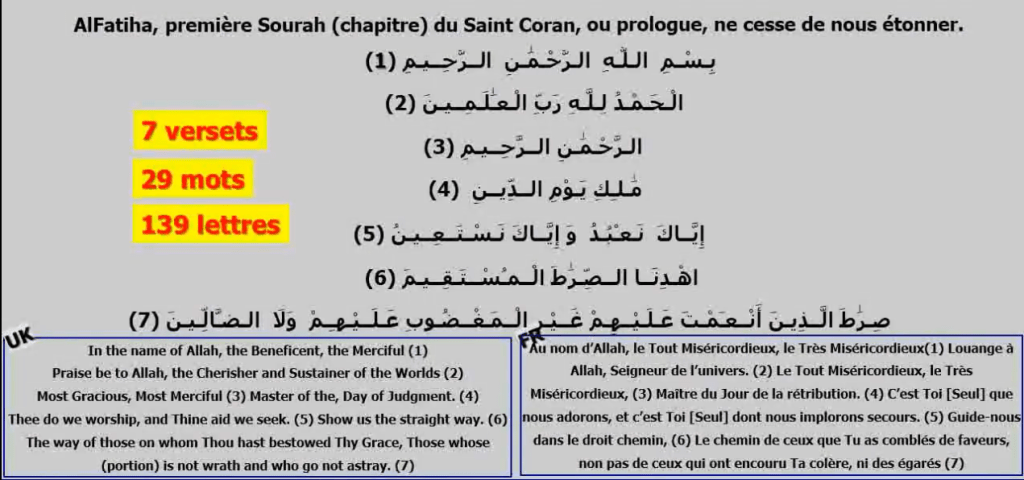
The first Picture shows the Quranic Verses of The Chapter Number 1 Surat Al-Fatiha showing there are 7 Verses, 29 Words and 139 Letters
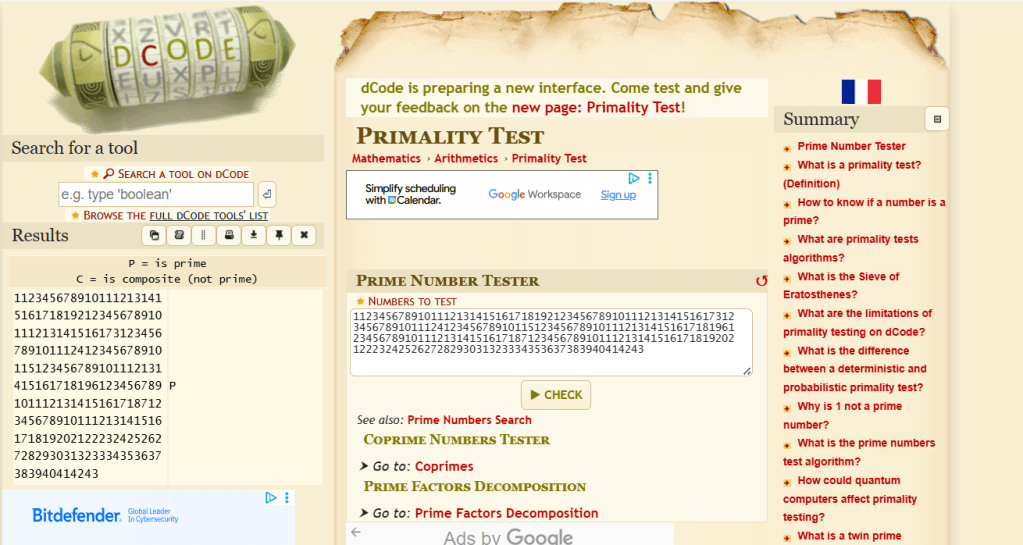
The Second Photo shows each Verse along with its Letter Count. For example, Verse 1 has 19 Letters, and Verse 2 has 17 Letters (the Arabic Letters are counted from Right to Left). He completed this for all Verses up to Verse 7. Then, he combined the numbers from Verse 1 to 7 with their Verse Numbers into one long number. The Big 1 represents Verse Number 1, followed by letter counts from 1 to 19. He continued with Big Number 2 for Verse Number 2, which included 17 letter counts. Ultimately, he produced a long number with 222 Digits!

The 222-digit number when verified in a Primary Test we found it is a Prime Number, This is an interesting phenomenon! Below are the Prime Test Results; on the left, it shows as Prime, and on the right, the long number with the result is displayed.
This Prime Number acts as a security; adding or removing any letter means it will no longer be a Prime Number.
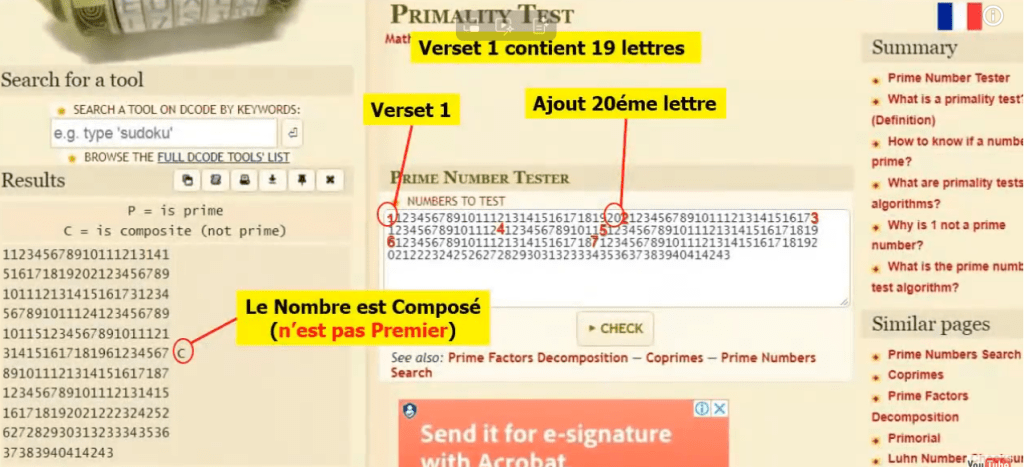
As the photo below Let’s try adding a letter to the first Verse. For example, if we add the 20th letter (since Chapter One of the Quran has 19 letters in Verse Number 1), we test by increasing the count from 19 to 20. (Number 19 is a letter M and if we just add another number representing an extra letter) This change turns the number into a Composite Number, no longer a Prime Number! do you see this Strange Testing!!!!
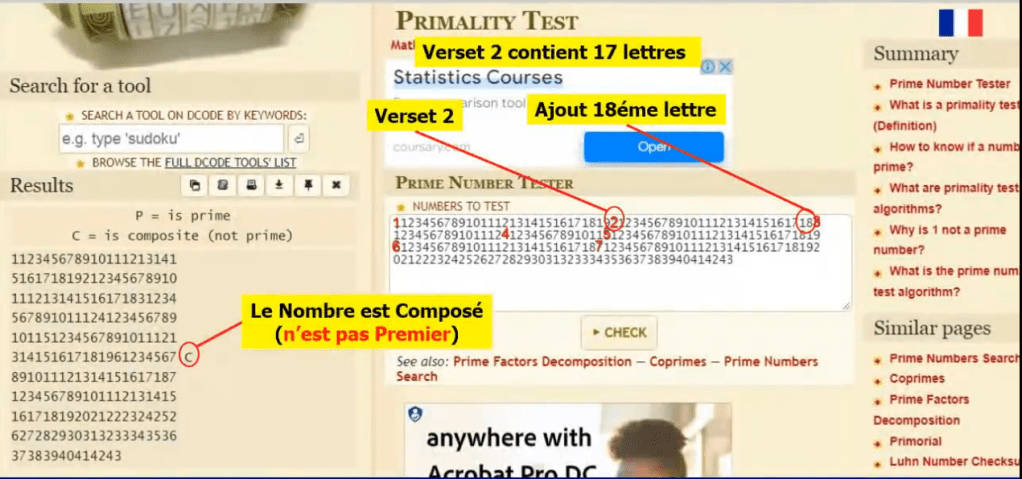
Let’s continue to add a letter on the Verse number 2 and see the Testing results. Verse Number 2 has 17 Letters and if we just add a letter (Number 18) the long number changes to a Composite Number!! see below the strange results. The result on the left shows C which means Composite Number!!!!!!!!!
lets continue the third testing. We added a letter (Number 13) on Verse 3. Verse 3 has 12 letters. Any changes we do the Prime number as below changes to Composite as you can see Letter C on the left of the Photo.

You can continue testing, and the results will remain the same! A prime number changes if you alter it (like adding or removing a letter, which we’ve represented with a number for testing). Therefore, a prime number is like a locker—any changes will affect the balance. Remember that Quran is Divine and it’s in its original form and any changes will destroy this divine balance!!!!!!!!!!! Allahu Akbar.
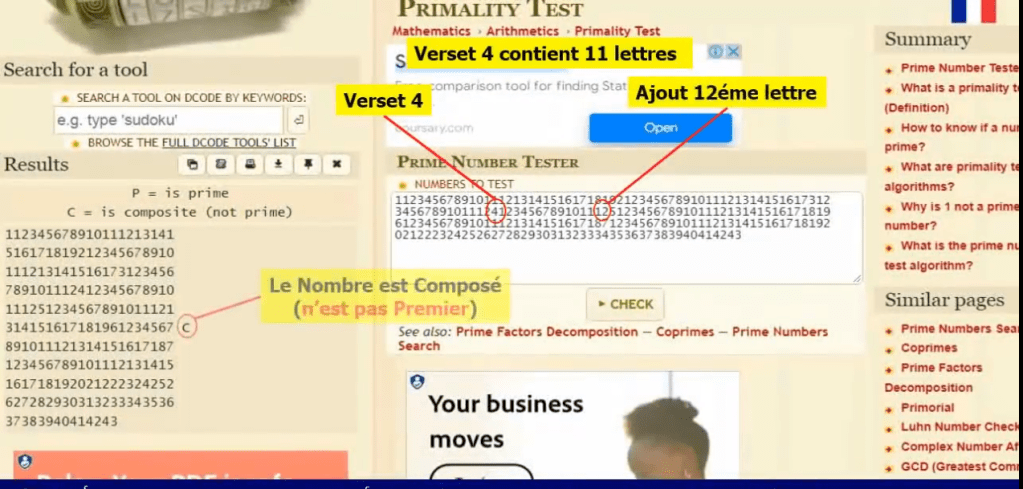
Let’s now check Verse Number 4. let’s add a letter. See the same results below. I mean the big number changes to the C which is a Composite Number!!!!!
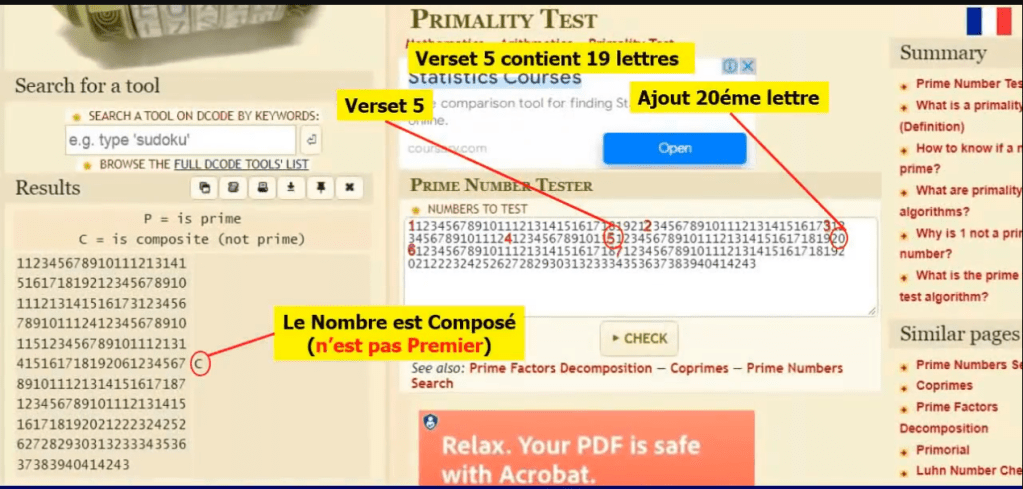
Let’s now check Verse Number 5. let’s add a letter. See the same results below. See the same results below. I mean the big number changes to the C which is a Composite Number!!!!!
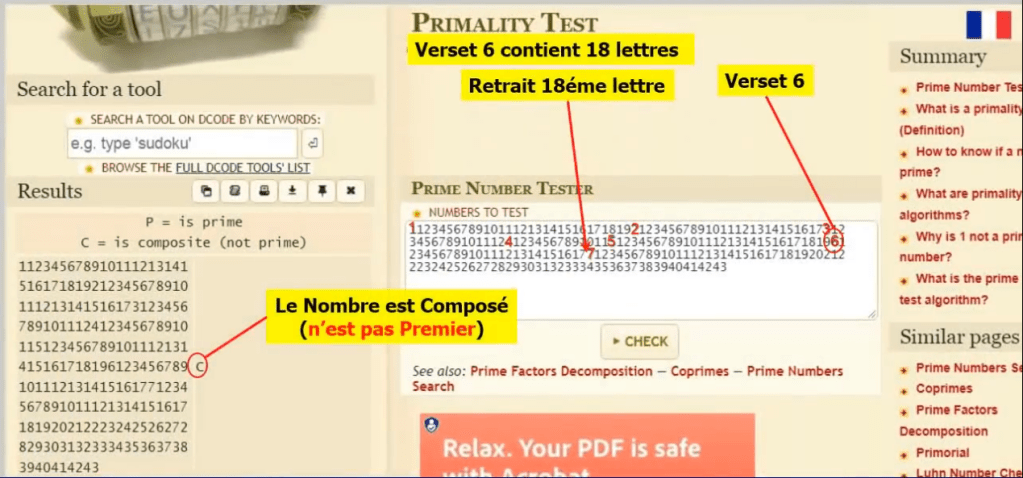
Let’s now check Verse Number 6. let’s add a letter. See the same results below. See the same results below. I mean the big number changes to the C which is a Composite Number!!!!!

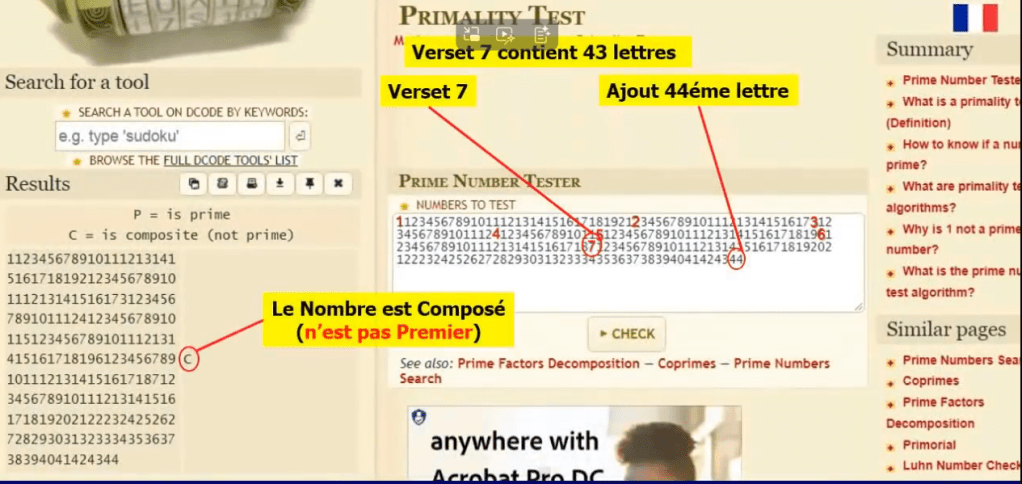
Let’s now check Verse Number 7. let’s add a letter. See the same results below. See the same results below. I mean the big number changes to the C which is a Composite Number!!!!!
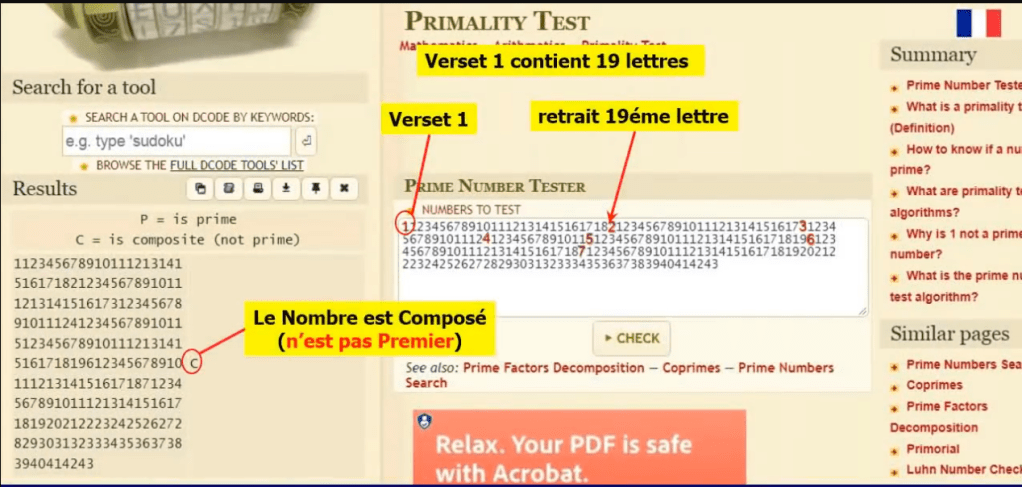
Now let’s explore the opposite: reducing the letters in the verses. Not adding but Removing one letter, specifically the 19th, which corresponds to the letter Mim in the First Verse yields the same results. This shows that adding or removing a letter changes a prime number to a C (Composite) one, disrupting the divine balance.
Now, let’s remove the letter N from Verse 2 of Chapter one, represented by Number 17, and observe how the numbers change to composite, disrupting the Divine Balance.
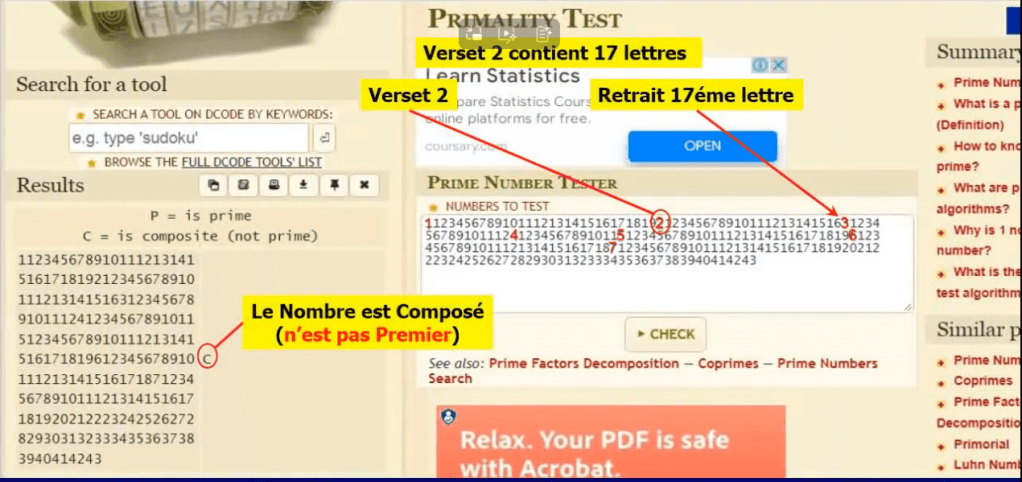
Now, let’s remove the letter M from Verse 3 of Chapter one, represented by Number 12, and observe how the numbers change to composite, disrupting the Divine Balance.
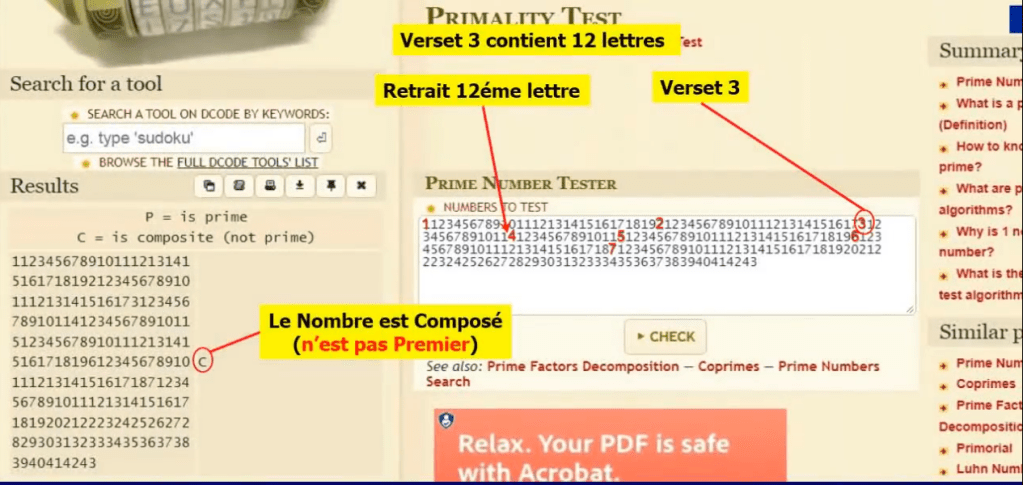
Now, let’s remove the letter N from Verse 4 of Chapter one, represented by Number 11, and observe how the numbers change to composite, disrupting the Divine Balance.

Now, let’s remove the letter N from Verse 5 of Chapter one, represented by Number 19, and observe how the numbers change to composite, disrupting the Divine Balance.

Now, let’s remove the letter M from Verse 6 of Chapter one, represented by Number 18, and observe how the numbers change to composite, disrupting the Divine Balance.
Now, let’s remove the letter N from Verse 7 of Chapter one, represented by Number 43, and observe how the numbers change to composite, disrupting the Divine Balance.

As we have seen previously, the Divine Language is a unique and intricate system that is both carefully controlled and intensely protected. This language, revered for its precision and depth, operates under strict rules, where the addition or subtraction of even a single letter can lead to catastrophic consequences, ultimately destroying the entire linguistic structure. The layers of meaning embedded within each word contribute to this complexity, as even slight alterations can ripple through the entire Quran, altering interpretations and impacting those who seek wisdom from it. And if only one letter can destroy the system, then what would happen if an entire word was added or removed, or if a whole verse was altered? Such changes could not only distort the message but also sever the profound connections that the Quran establishes with humans and Jinns highlighting the delicate balance that exists within this sacred form of communication. And for this reason it’s not possible to change the Quran in any form. The Quran of today is the same since the revelation and its always in its pure form. !!!!
More Topics soon Insha’Allah (If Allah Wills)……………..
 SCIENTIFIC AND ISLAMIC RESEARCHES