02/03/2026
1/Human Components: Research From the Quran
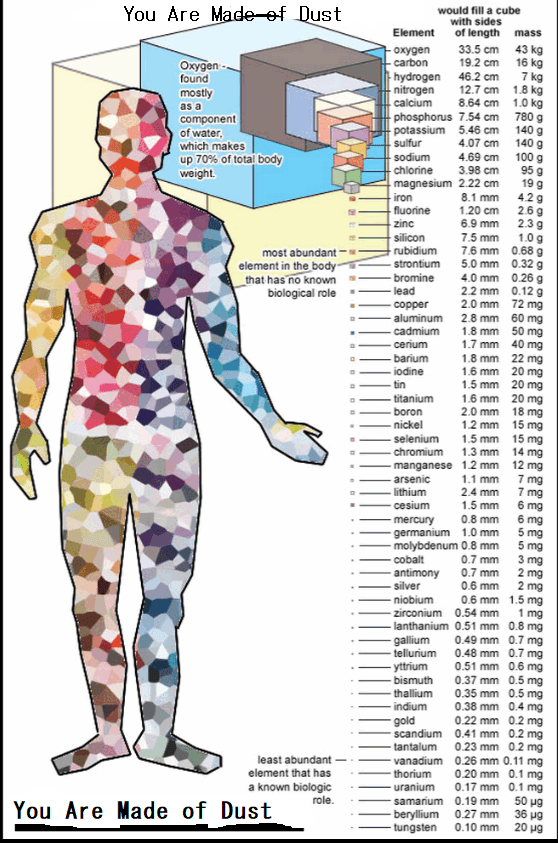
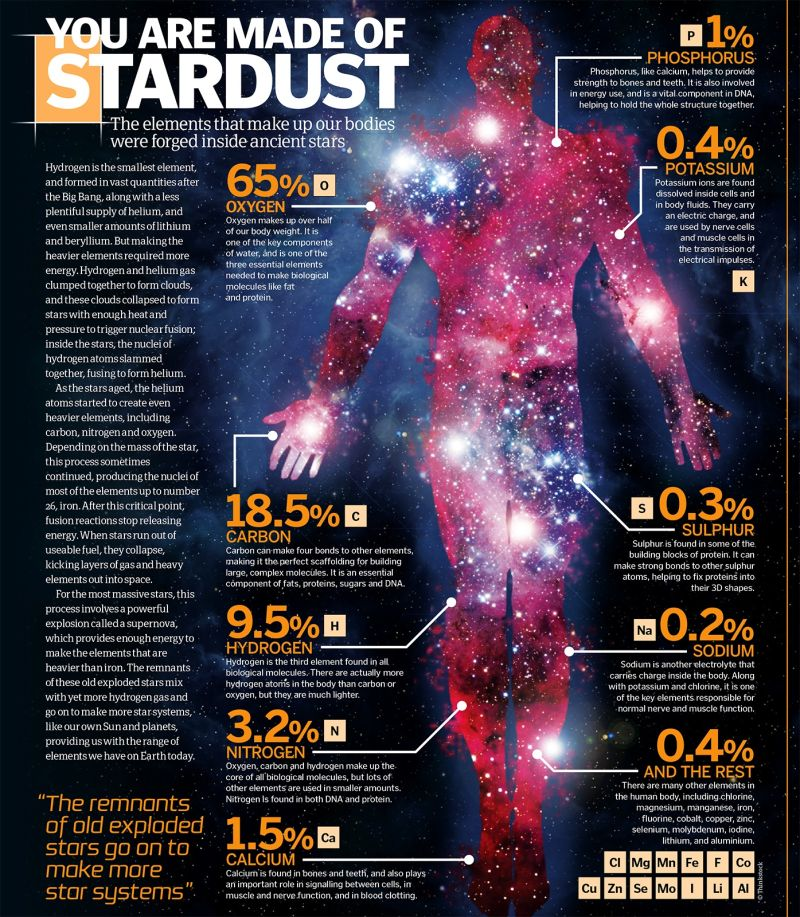
The creation of the human being in the Quran is described as a deliberate, multi-stage process initiated by God (Allah) using terrestrial elements. Unlike the creation of the Jinn, who were brought into being from “scorching fire” (nar al-samum), or the Angels, who were created from light (nur), the human being—specifically the first man, Adam—was fashioned from various states of earth and water before being animated by a divine spirit.
The Quranic Stages of Human Creation
The Quranic narrative of human origins does not describe a singular, instantaneous event but rather a transformation of matter through several distinct phases. These stages are often categorized by the specific terminology used in the Arabic text to describe the “earth” at different points of the creative process.
Stage 1. The Stage of Dust (Turab)
The foundational element of human creation is simple dust or soil. This represents the most basic, dry state of the earth.
Verse: إِنَّ مَثَلَ عِيسَىٰ عِندَ ٱللَّهِ كَمَثَلِ ءَادَمَۖ خَلَقَهُ ۥ مِن تُرَابٍ۬ ثُمَّ قَالَ لَهُ ۥ كُن فَيَكُونُ (٥٩)
Indeed, the example of Jesus to Allah is like that of Adam. He created Him from dust; then He said to him, “Be,” and he was. (Surah Ali ‘Imran 3:59)
Explanation: The Words خَلَقَهُ مِنْ تُرَابٍ establishes that the origin of the human body is the same as the earth itself. Scholars note that “turab” refers to the elemental components found in soil, which are also present in the human body.
Stage 2. The Stage of Water and Clay (Tiin)
When water is added to the dust, it becomes clay (tiin). The Quran further describes this as “sticky clay” (tin lazib), indicating a cohesive, malleable substance.
Verse: فَٱسۡتَفۡتِہِمۡ أَهُمۡ أَشَدُّ خَلۡقًا أَم مَّنۡ خَلَقۡنَآۚ إِنَّا خَلَقۡنَـٰهُم مِّن طِينٍ۬ لَّازِبِۭ (١١)
Then inquire of them, [O Muhammad], “Are they a stronger [or more difficult] creation or those [others] We have created?” Indeed, We created men from sticky clay. (Surah As-Saaffat 37:11)
Explanation: The words إِنَّا خَلَقْنَاهُمْ مِنْ طِينٍ لَازِبٍ represents the mixing of the dry elements with water to create a formable material. It highlights the transition from loose particles to a structured mass.
Stage 3. The Stage of Altered Dry Clay from Black Mud (Hama’in Masnun)
The clay then undergoes a process of aging or fermentation, becoming dark and “altered” in smell and texture.
Verse: وَلَقَدۡ خَلَقۡنَا ٱلۡإِنسَـٰنَ مِن صَلۡصَـٰلٍ۬ مِّنۡ حَمَإٍ۬ مَّسۡنُونٍ۬ (٢٦)
And We did certainly create man out of clay from an altered black mud. (Surah Al-Hijr 15:26)
Explanation: Swalswal refers to the dry, ringing clay, Hama’ refers to black mud that has changed due to fermentation, and Masnun means it has been molded or shaped. This suggests that the physical form of the human was fashioned while the material was in this dark, malleable state.
This specific verse is crucial because it combines two of the stages mentioned above. The word Salsal (صَلْصَالٍ) refers to the dry, ringing clay. The word Hama’ (حَمَإٍ) refers to the black, fermented mud, and Masnun (مَسْنُونٍ) refers to it being “altered” or “molded.”
Classical commentators like Ibn Kathir explain that the “altered mud” was the raw material used to shape the form of Adam, and once that form dried and became “sounding clay,” the spirit was breathed into it. This verse serves to remind humans of their humble physical origins to prevent arrogance, while the subsequent verses regarding the prostration of the angels highlight the nobility granted to man through the divine spirit.
Stage 4. The Stage of Sounding Clay (Salsal)
As the molded figure dries, it becomes “sounding clay” (salsal). This is clay that is so dry and hard that it produces a ringing or clinking sound when struck, similar to pottery.
Verse: خَلَقَ الْإِنْسَانَ مِنْ صَلْصَالٍ كَالْفَخَّارِ
He created man from clay like [that of] pottery. (Surah Ar-Rahman 55:14)
Explanation: This is the “cooked” or “baked” state, Salsal indicates the completion of the physical vessel or “statue” of the human.
Stage 5. The Infusion of the Spirit (Ruh)
The final stage is the transition from a physical object to a living being. God breathes His spirit into the fashioned clay, granting it life, consciousness, and intellect.
Verse: فَإِذَا سَوَّيْتُهُ وَنَفَخْتُ فِيهِ مِنْ رُوحِي
And when I have proportioned him and breathed into him of My [created] soul, then fall down to him in prostration.”(Surah Al-Hijr 15:29)
Explanation: This is the metaphysical component. The human is not just “cooked dust”; it is a composite of the lowest material (mud) and the highest honor (the Divine Spirit).
- Physical Component: Derived from the earth in various states (Dust تُرَابٍ۬ Sticky Clay (Dust + Water) طِينٍ۬ لَّازِبِۭ Altered Fermented Mud حَمَإٍ۬ مَّسۡنُونٍ۬ Dried Clay صَلْصَالٍ ).
- Spiritual Component: The Ruh (Spirit), which is a unique creation of God that provides the human with “uprightness,” intellect, and the capacity for worship.
The Quranic view explicitly refutes a purely materialistic origin. While the body returns to the earth (dust), the spirit is what defines the “humanity” of the individual and allows for the metaphysical connection between the creator and the created.
2/AFTER THE BIG BANG
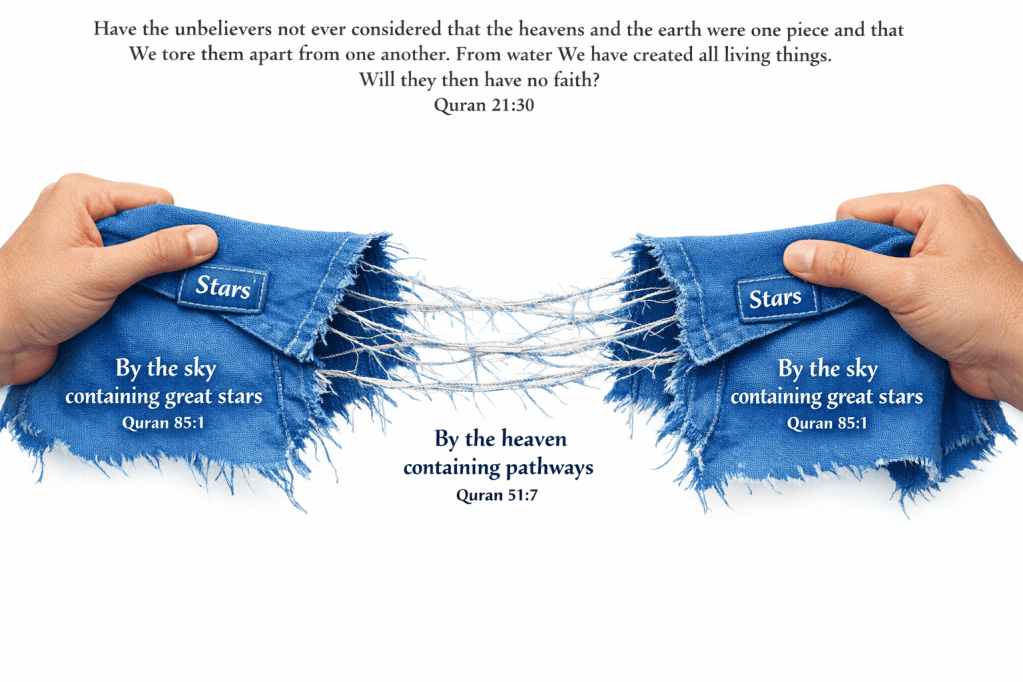
سُوۡرَةُ البُرُوج Chapter 1 Verse 1
بِسۡمِ ٱللَّهِ ٱلرَّحۡمَـٰنِ ٱلرَّحِيمِ
وَٱلسَّمَآءِ ذَاتِ ٱلۡبُرُوجِ (١)
Translation:
By the sky containing great stars
سُوۡرَةُ الاٴنبیَاء Chapter 21 Verse 30
أَوَلَمۡ يَرَ ٱلَّذِينَ كَفَرُوٓاْ أَنَّ ٱلسَّمَـٰوَٲتِ وَٱلۡأَرۡضَ ڪَانَتَا رَتۡقً۬ا فَفَتَقۡنَـٰهُمَاۖ وَجَعَلۡنَا مِنَ ٱلۡمَآءِ كُلَّ شَىۡءٍ حَىٍّۖ أَفَلَا يُؤۡمِنُونَ (٣٠)
Have the unbelievers not ever considered that the heavens and the earth were one piece and that We tore them apart from one another. From water We have created all living things. Will they then have no faith?
The Chronological Evolution of the Universe: From the Big Bang to the First Stars
The history of the cosmos is a narrative of cooling and structural organization, beginning from a state of nearly infinite density and temperature. According to the standard cosmological model, known as the CDM (Lambda Cold Dark Matter) model, the universe began approximately 13.8 billion years ago.
In its earliest moments, the universe was a “soup” of energy and subatomic particles so hot that the fundamental forces of nature—gravity, electromagnetism, and the nuclear forces—were unified into a single super-force.
As the universe expanded, it cooled, allowing these forces to separate and matter to begin forming from pure energy.
The Birth of Matter and the Dark Ages
In the first few minutes after the Big Bang, a process called Big Bang Nucleosynthesis occurred. During this brief window, the universe was hot enough to act as a nuclear fusion reactor, fusing protons and neutrons to create the nuclei of the first light elements: hydrogen, helium, and a trace of lithium.
However, for the next 380,000 years, the universe remained a hot, opaque plasma. Electrons were too energetic to stay bound to nuclei, and photons (light particles) were constantly deflected by these free electrons, much like light trying to pass through a thick fog.
Once the temperature dropped to about 3,000 Kelvin, a pivotal event called “Recombination” took place. Electrons finally settled into orbits around nuclei, forming the first neutral atoms.
This cleared the “fog,” allowing light to travel freely across space for the first time. This first light is still detectable today as the Cosmic Microwave Background (CMB) radiation.
Following this, the universe entered the “Dark Ages,” a period lasting hundreds of millions of years where no stars existed, and the only light was the fading afterglow of the Big Bang.
Gravity and the Formation of Stars and Pathways
During the Dark Ages, the universe was not truly empty; it was filled with clouds of hydrogen and helium gas and a mysterious substance called dark matter.
Dark matter acted as the invisible “scaffolding” of the universe. Because it has mass but does not interact with light, it began to clump together under the force of gravity much faster than ordinary matter.
These clumps of dark matter created gravitational “wells” or pathways that pulled in the surrounding hydrogen gas.
As the gas fell into these gravitational pathways, it became denser and hotter. Eventually, the centers of these gas clouds reached temperatures high enough to trigger nuclear fusion, marking the birth of the first stars, known as Population III stars.
These stars were massive, bright, and short-lived. When they died in violent explosions called supernovae, they scattered heavier elements like carbon and oxygen into space, which would eventually form planets and life.
These stars clustered together along the dark matter pathways to form the first galaxies, creating the large-scale “cosmic web” structure we see in the universe today.
Summary of Stages of the Universe’s Journey
The following is a simplified, chronological step-by-step summary of the universe’s journey:
- The Big Bang (0 seconds): The universe begins as an incredibly hot, dense point of energy and space itself starts to stretch.
- Inflation (10−36 seconds): A super-fast growth spurt where the universe expands exponentially in a tiny fraction of a second.
- Particle Formation (10−6 seconds): The universe cools enough for quarks to combine into protons and neutrons.
- First Nuclei (3 minutes): Protons and neutrons fuse to create the centers (nuclei) of hydrogen and helium atoms.
- Recombination (380,000 years): Electrons join with nuclei to form the first stable atoms. The universe becomes transparent, and light travels freely.
- The Dark Ages (380,000 – 150 million years): No stars have formed yet. The universe is dark, but gravity is busy pulling gas into “pathways” created by dark matter.
- First Stars (150 – 400 million years): Gravity collapses gas clouds within the pathways, heating them up until they “turn on” as the first stars.
- Galaxy Formation (500 million years+): Stars group together along the cosmic pathways to form the first galaxies and the large-scale structure of the universe.
More Topics soon Insha’Allah (If Allah Wills)
 SCIENTIFIC AND ISLAMIC RESEARCHES